


How to Maintai Oil Lubrication System

An embroidery machine works continuously for long hours. Inside the machine, many moving parts operate at high speed.
Without proper lubrication, these parts create:
More friction
More heat
Faster wear
Higher maintenance costs
That is why the oil lubrication system is one of the most important parts of an embroidery machine.
The good news is that maintaining it is simple if you follow a regular routine.
This guide explains everything in easy language.
Why Is the Oil Lubrication System Important?
Think of engine oil in a car.
Without oil:
The engine heats up.
Parts wear quickly.
Performance drops.
The same happens inside an embroidery machine.
A proper lubrication system helps:
Reduce friction
Keep machine movement smooth
Protect moving parts
Improve machine life
Maintain consistent embroidery quality
Regular lubrication is a small job that prevents expensive repairs.
Signs Your Machine Needs Lubrication Attention
Watch for these warning signs:
Machine sounds louder than usual
More vibration during operation
Machine feels hotter after long running
Uneven movement
Reduced production smoothness
Higher maintenance frequency
These signs do not always mean a serious problem, but they should not be ignored.
Step 1: Check the Oil Level Daily
Before starting production:
✔ Check the oil level indicator or oil tank (if your machine has one).
The oil should remain within the recommended level.
Avoid:
Running with very low oil
Filling beyond the recommended level
Both can affect machine performance.
Step 2: Use the Recommended Lubrication Oil
Not every machine uses the same oil.
Always use:
Clean oil
Recommended machine oil
Quality lubrication oil suitable for embroidery machines
Avoid:
Unknown oil brands
Mixing different oil types
Dirty or contaminated oil
Using the wrong oil may reduce lubrication efficiency.
Step 3: Inspect for Oil Leakage
Walk around the machine and look for:
Oil drops
Wet areas
Leaking pipes
Loose fittings
Small leaks become bigger if ignored.
Repairing a minor leak early is much cheaper than replacing damaged parts later.
Step 4: Keep the Lubrication Area Clean
Dust, thread pieces, and fabric particles are common in embroidery factories.
If dirt enters the lubrication system, it can reduce oil flow.
Daily cleaning should include:
Wiping excess oil
Removing thread waste
Keeping the oil tank area clean
A clean machine always performs better.
Step 5: Monitor Machine Sound
Experienced operators often identify lubrication problems simply by listening.
A properly lubricated machine usually sounds:
Smooth
Consistent
Stable
If you hear:
Grinding noise
Metallic sound
Sudden change in machine sound
inspect the lubrication system immediately.
Step 6: Check Oil Flow Regularly
Some embroidery machines have a visible oil circulation system.
Check whether oil is flowing properly.
Poor circulation may happen because of:
Blockage
Low oil level
Maintenance delay
Proper oil movement protects internal components.
Step 7: Follow a Regular Maintenance Schedule
Do not wait until the machine develops problems.
Create a simple routine.
Daily
Check oil level
Inspect for leakage
Clean surrounding area
Weekly
Observe oil circulation
Inspect hoses and fittings
Listen for unusual sound
Monthly
Complete lubrication system inspection
Check overall machine condition
Arrange preventive servicing if required
Preventive maintenance always costs less than emergency repairs.
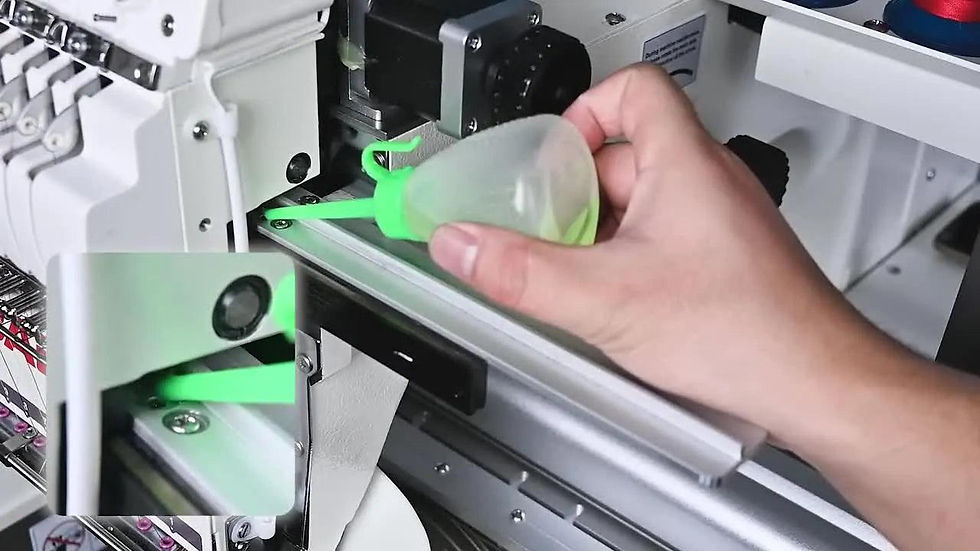
Common Lubrication Mistakes
Many factory owners unknowingly make these mistakes.
Filling More Oil Than Required
More oil does not mean better lubrication.
Always follow the recommended level.
Ignoring Small Leaks
A small leak today may become a major repair next month.
Never ignore leakage.
Using Low-Quality Oil
Cheap oil may save money initially but increase maintenance later.
Good lubrication protects expensive machine components.
Skipping Regular Inspection
Many lubrication problems develop slowly.
Regular inspection helps identify issues before production is affected.
How Proper Lubrication Improves Production
A well-maintained lubrication system helps:
Smooth machine operation
Better stitch quality
Lower vibration
Reduced thread breaks
Less downtime
Longer machine life
It also improves operator confidence because the machine runs more consistently.
Practical Example
Imagine two embroidery factories using similar machines.
Factory A
Checks lubrication daily
Uses recommended oil
Performs preventive maintenance
Result:
Smooth production
Lower repair costs
Stable embroidery quality
Factory B
Ignores oil level
Delays maintenance
Fixes problems only after breakdown
Result:
Frequent stoppages
Higher repair expenses
Production delays
The difference is not only the machine.
It is the maintenance discipline.
Simple Maintenance Checklist
Before every production day, ask:
✅ Is the oil level correct?
✅ Is there any leakage?
✅ Does the machine sound normal?
✅ Is the lubrication area clean?
✅ Is oil circulating properly?
If the answer is "Yes" to all five questions, your machine is ready for smooth production.
The oil lubrication system is the lifeline of an embroidery machine.
It does not require complicated maintenance, but it does require consistency.
A few minutes of inspection every day can help you:
Reduce unexpected breakdowns
Extend machine life
Improve embroidery quality
Lower maintenance costs
Increase long-term return on investment (ROI)
In the embroidery business, successful factories understand one simple principle:
Well-maintained machines produce better work, require fewer repairs, and support long-term business growth.
Whether you need:
Preventive maintenance advice
Machine servicing
Lubrication system inspection
A new embroidery machine with reliable performance
GM Machines is ready to help with practical guidance, technical support, and live machine demonstrations.
Comments